Wednesday, 16 June 2010

Metering from the environment

Another great tip from Peterson in his book Understanding Exposure relates to how you can use elements within your scene to take meter readings when your cameras meter is confused under difficult lighting situations.  I have tried this and it really works.  Here is the summary.  As before I strongly recommend reading the book to get a better understanding.  I am only writing the information below for reference purposes.

The Sky Brothers:
  1. Brother blue sky: for all kinds of photograph on sunny days take reading from of the sunny blue sky
  2. Brother backlit sky: for backlit sunrise and sunset landscapes take reading to the side of the sun
  3. Brother dusky blue sky: for city or country scenes at dusk take reading from the dusk sky
  4. Brother reflecting sky: for coastal scenes or lake reflections at sunrise or sunset take reading from light reflecting off the surface of the water
Mr. Green Jeans: if the composition has a lot of green in it you take the metering off the green area and expose -2/3.

Try it for yourself and see.  Hope that helps.

Creatively correct exposure: reference guide

Peterson, in his book Understanding Exposure, talks about creatively correct exposure.  With this term he is referring to the fact that any number of exposures may be technically correct but not all of them are creatively correct.  He provides some guidelines for the beginner to try and help them achieve creatively correct exposures more quickly.  I found this to be extremely useful and am including it below for reference.  I strongly suggest buying and reading the book to make more sense of the information below.

The following types of photograph rely on aperture to be creatively correct.
  1. Storytelling picture: small aperture (f/16, f/22, f/32)
  2. Singular-theme (isolate target): large aperture (f/2.8, f/4, f/5.6)
  3. Who cares (subject is similar distance to background): (f/8, f/11)
  4. Macro: Aperture is the critical element, set as required
The following types of photography rely on shutter speed to be creatively correct.
  1. Freeze action: fast shutter speed (1/250s, 1/500s, 1/1000s)
  2. Panning: slow shutter speed (1/60s, 1/30s, 1/15s)
  3. Imply motion: super-slow shutter speed (1/4s, 1/2s, 1s)

8-6-4: a great starting point for indoor flash photography

I sometimes find myself spending too long to set up my camera for a shot. This can lead to missed opportunities. A great setup for getting going quickly is to simply go with 8 6 4!

ISO 800, exposure time 1/60th, Aperture f/4

This should get you up and running with useable pictures. From there you can adjust as necessary.  Thanks to AliB at Talk Photography forum for this great piece of advice (www.alisonbaileyphotography.co.uk)

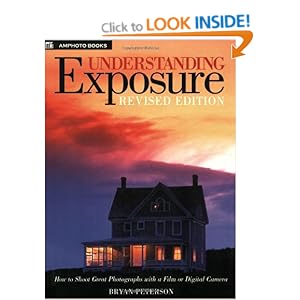
Understanding Exposure by Bryan Peterson


Just finished this book. This is a fantastic book that I would recommend to anyone getting in to photography. It's relatively slim and so is not daunting to read. It's written in an easy to read style and there are lots of pictures with descriptions next to each picture which describe how exposure readings were taken for that picture and what exposure was actually used.

AKPhoto Blog

Hi, follow me on my journey in the world of photography. I'll share tips, inspiration and my work with you as time goes on.

Thanks for reading,
Amir